

Final Grade Excavating · Ogden, UT
Water Remediation in Ogden
Wet basements almost always start outside. The ground slopes back toward the house, the downspouts let go right against the wall, or the window wells fill up every spring. We do the outside water work for homes and property owners across Ogden and Northern Utah: buried downspout lines, regrading, French drains and drain tile, window well repair and drains, core drilling, and sump pits dug and set. We find where the water is actually getting in first, and if a dig won't fix it we'll tell you straight.
What's included
Water Remediation, done the right way.
- Downspouts plumbed off the rain gutters into buried line and carried out to daylight, away from the house.
- Regrading the dirt around the foundation so the ground falls away from the house instead of back toward it.
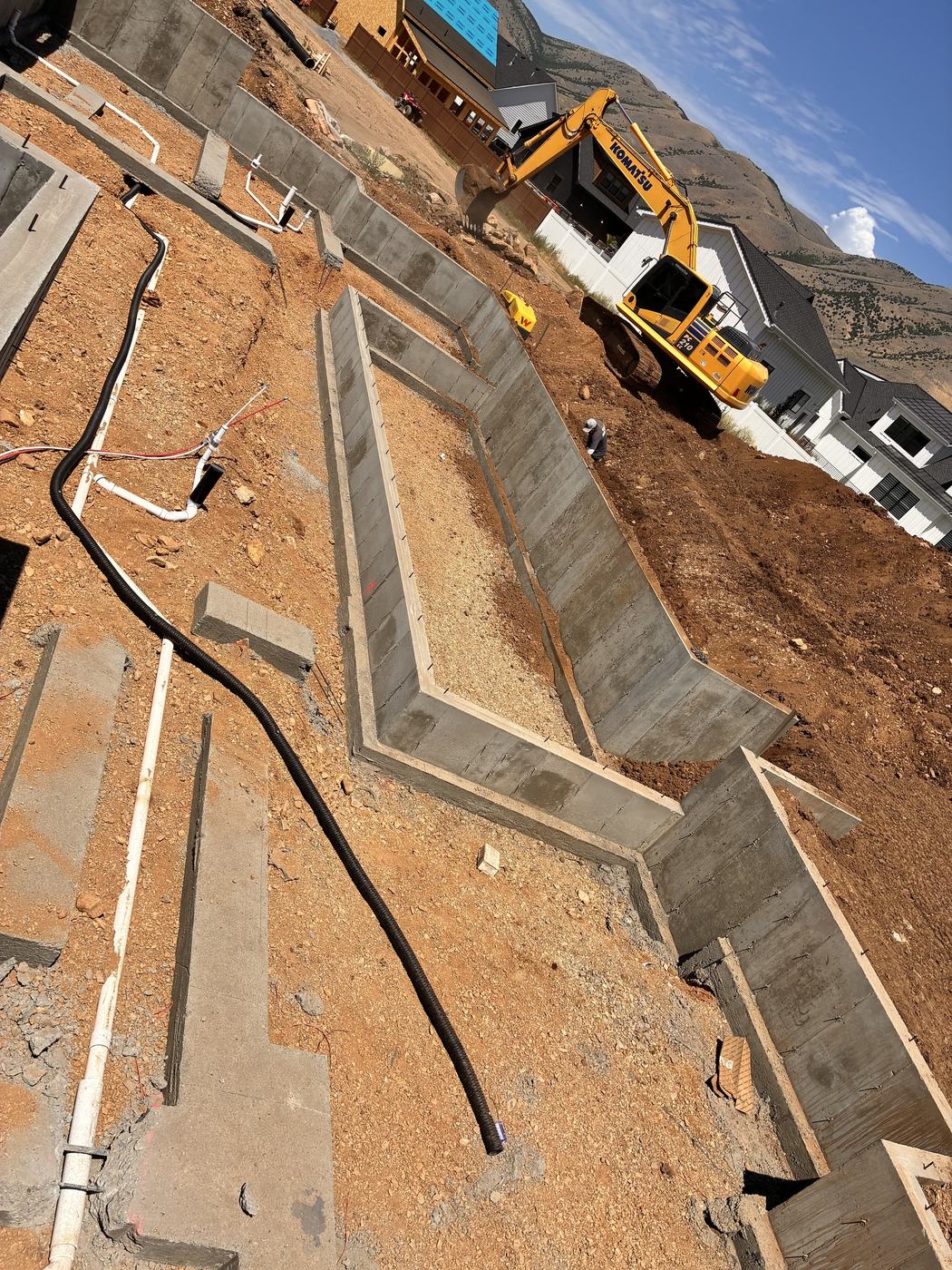
- French drains, curtain drains, and footing drain tile: perforated pipe, clean rock, and filter fabric.
- Catch basins and area drains for the low spot in the yard that stays wet.
- Window well repair and window well drains, so the well has somewhere to send water.
- Core drilling through a foundation wall or a footing so a drain line has a way through.
- Sump pits dug and set where the water collects, with the discharge run well away from the house before it lets go.
- Digging and setting the pit and the basin for a sewer ejection pump, with the pump itself coordinated with your plumber.
Why basements get wet in Northern Utah
Out here the water shows up on a schedule. Snow sits all winter, then March through May it melts faster than the ground can take it and the water table comes up with it. A lot of this valley is Weber River sand and gravel that drains fast right up until it's saturated, and the low spots run to clay and silt that barely drain at all, so where your house sits changes how much water it has to deal with. Then there's backfill, which keeps settling against a foundation for the first few years and quietly tips the grade back toward the wall. Add a downspout with nothing under it but a splash block, and a window well with no drain or a drain that's silted shut, and the water ends up right where you don't want it. Those are the things we go looking for.
On the job
Water work we have done.
The honest place to start
Start with a free estimate.
Tell us what you're planning, a foundation dig, a drainage fix, a driveway, a rock wall, a shop pad, or a whole site to clear and grade, and we'll come out, walk it, and give you an honest price. No cost and no pressure. Call or text to set it up.
Good to know
Water Remediation questions, answered.
My basement takes water every spring. Where do you start?
My window wells fill up with water. Can you fix that?
What's the difference between a sump pump and a sewer ejection pump?
Why would you core drill my foundation?
Do you do water damage cleanup or mold work?
Free quote
Ready to get started?
Tell us about your project and we'll call or text you back with an honest written price. Every estimate is free, with no pressure.
Open by appointment